





Milk for kittens - The initial source of nutrition for overall development.
For a kitten, the first few weeks of life are a critical period that determines its health and development, and mother's milk is the best choice for providing this nutrition.
However, mother cats don't always have enough milk, so during this period you need to ensure you provide specialized milk substitutes to support the cat's development.
But choosing the right milk for your kitten is extremely important.
Choosing the wrong type of milk not only wastes money but also causes kittens to miss out on essential nutrients, leading to serious digestive problems and potentially severely impacting their health and lifespan.

1. Choose the right type of milk for kittens.
Milk is a core and crucial source of nutrition that determines the survival and overall development of kittens.
From the very first weeks of life, breast milk provides a perfect biological formula, including essential immune antibodies (colostrum) and an ideally balanced ratio of macronutrients.
For this reason, ensuring a supply of quality milk is a top priority for long-term physical health.
1.1. The role of mother's milk for kittens
The importance of mother's milk for kittens:
-
-
Mother's milk provides antibodies, helping to transfer important immune factors from mother to kitten, protecting kittens from pathogens during their vulnerable early stages of life.
-
Provide all the necessary nutrients, including protein, fat, vitamins, and minerals, for the development and growth of kittens.
-
Digestive support: Contains growth factors and natural probiotics to help establish a healthy gut microbiome.
-
Providing water: Newborn kittens cannot drink water on their own, so milk provides the necessary fluids to keep their bodies hydrated.
-
1.2. Specialized formula milk as a breast milk substitute

Cats need supplemental milk in cases where the mother cat's milk is insufficient or the kittens are orphaned. Supplementing milk at the time the kitten needs it will help its development.
It is important that you use specialized milk substitutes for kittens, formulated to closely resemble mother's milk.
Never give human milk to kittens because it contains substances that kittens cannot digest.
2. Stages when cats need supplemental milk.
2.1. For newborn kittens
In some cases, kittens need milk replacer to ensure they receive adequate nutrition and support healthy development.
Maternal death: If the mother cat dies during or after giving birth, this is an emergency that requires immediate use of a milk substitute.
The mother cat is experiencing health problems: These include issues such as mastitis, milk fever, stress, the need for isolation for treatment, or insufficient milk production due to a large litter.
Abandoned kittens: Kittens that have been abandoned by their previous owners or are found without their mother.
2.2. Adult cats need supplemental milk.
For adult cats, milk is a supplemental source of nutrition, not an essential part of their daily diet.

Weakened cats: After surgery or illness, cats need milk products that stimulate their appetite, provide immediate energy, and combat weakness.
Mother cats nursing their kittens: Specialized milk can be used to enhance the nutrition of mother cats during the period of raising their kittens.
Cats need to gain weight: If they are thin, they need the nutrients from milk to gain weight and support their health without making them too full.
Note: For sick cats, any dietary changes, including the addition of milk, must be approved and specifically guided by a veterinarian to ensure the milk does not negatively affect their medical condition or ongoing medication.
3. Popular types of milk for cats
3.1. Specialized milk substitute for kittens
This is the top recommended choice for kittens under 4 weeks old.
A complete and balanced nutritional formula with protein, fat, and essential vitamins that most closely resembles mother cat's milk.
3.2. Powdered milk for cats of all ages
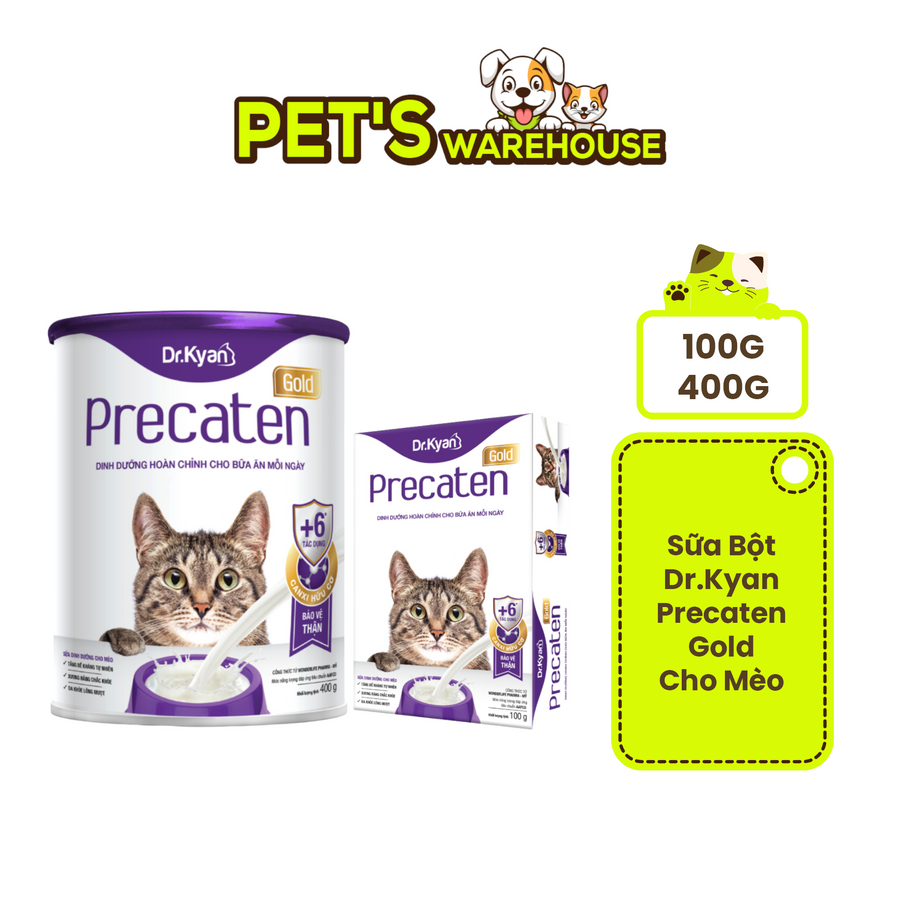
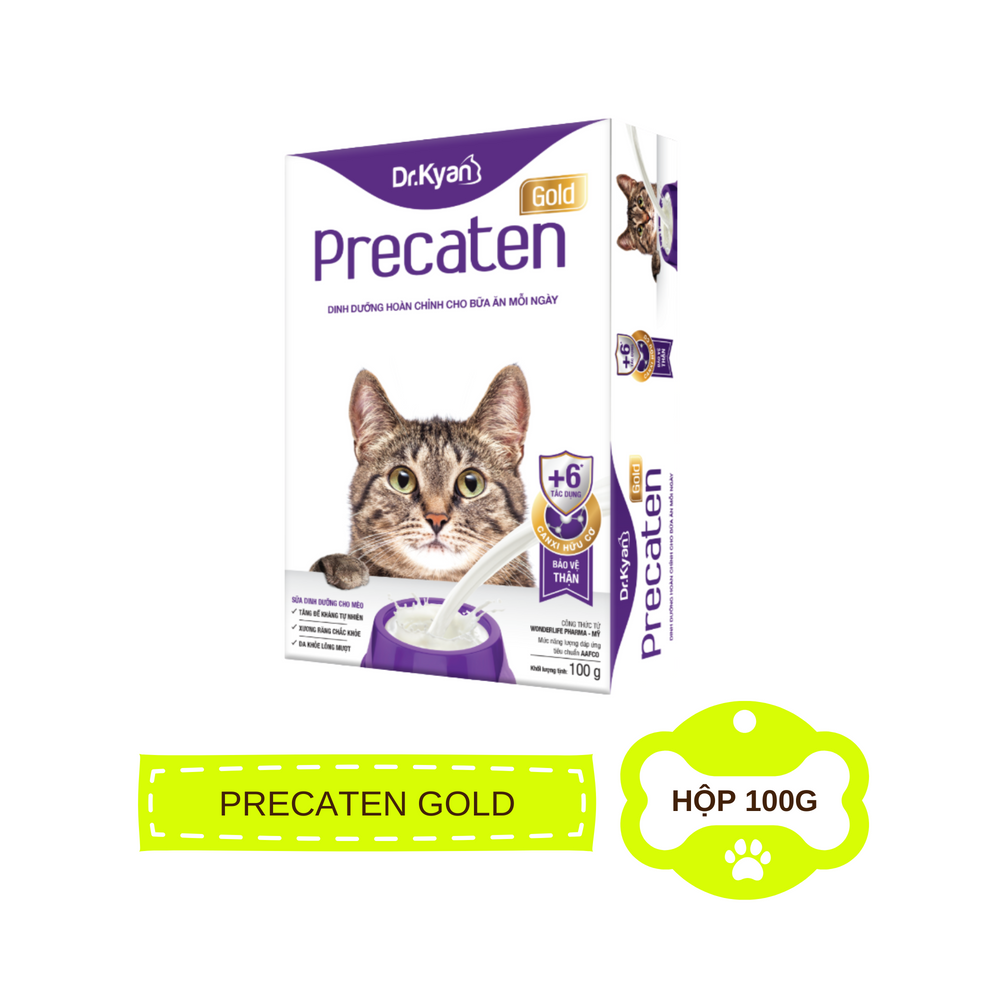
Dr. Kyan Precaten Gold powdered milk

This formula of 7 natural minerals helps strengthen bones and teeth, supports bone mineralization, bone regeneration, maintains bone density, regulates calcium levels in bones, and promotes bone tissue development and repair. Organic calcium protects the kidneys.
3.3. Nutritional milk with screw cap
DoggyMan Nutritional Milk with Screw Cap

The product is pre-prepared and ready to use right out of the box, saving time and effort in preparation.
The ingredient ratios are standardized by the manufacturer, ensuring consistency and accuracy in the formula, avoiding errors in concentration (too concentrated or too diluted).
4. Instructions on how to properly prepare formula for kittens.
4.1. How to prepare powdered milk
Step 1: Preparation, cleaning, and sterilization
-
-
Wash your hands thoroughly before preparing formula.
-
Sterilize the utensils (kitten feeding bottle, nipple, cup) by boiling them in water or using a specialized bottle sterilizer.
Water temperature for mixing formula: Ensure the water is warm, around 40-50°C. Water that is too hot will destroy the vitamins and nutrients in the formula powder. Water that is too cold will make it difficult for the powder to dissolve and can easily cause the kitten to have a cold stomach.
-
Step 2: Accurate mixing ratio
-
-
Always read carefully and adhere to the manufacturer's recommended ratios on the packaging of the product you are using.
-
Add the required amount of water to the bottle, then use the measuring spoon (usually included in the box) to measure the exact amount of milk powder, leveling it off the rim of the spoon. Stir well or shake gently until the milk powder is completely dissolved.
-
Step 3: Check the temperature before giving it to your cat.
-
-
The ideal milk temperature for kittens should be close to their mother's body temperature (around 38°C).
-
Safety test: Place a few drops of milk on the back of your hand or wrist. It should feel slightly warm, not too hot or too cold.
-
Place kittens in a prone or slightly side-lying position to nurse (similar to natural nursing). Avoid placing them on their backs as this can easily lead to milk aspiration into the lungs, which is very dangerous.
-
4.2. Common mistakes when choosing milk for cats
Using human milk for kittens: The high lactose content in these products is unsuitable and can cause digestive problems such as diarrhea and vomiting, threatening the kitten's health.
Using expired milk or improper storage: Using expired milk or reheating milk that has been prepared too long ago creates favorable conditions for bacteria to grow, causing food poisoning in cats.
Incorrect milk preparation ratios: Don't think that making the milk more concentrated will provide more nutrients, or that making it too diluted will save money; it can lead to consequences such as indigestion, constipation, and weakness.
5. Choosing quality milk for your cat is a wise investment in their health.

Choosing the right milk to suit your physical condition and needs is a top priority.
If you're still unsure about your decision, visit your nearest Pet's Warehouse pet store for expert advice. We're committed to providing helpful information to ensure your pet receives the best possible initial nutrition and recovery support.