






Caring for your dog's ears, eyes, and mouth - Secrets to keeping your pet clean, beautiful, and healthy.
Discover how to properly care for your dog's ears, eyes, and mouth, expert tips, and recommendations for the best products for your beloved pet.
1. Why are the ears, eyes, and mouth considered "sensitive areas" requiring special care?
Besides having a soft, fragrant coat, parts like your dog's ears, eyes, and mouth also need attention. These are three sensitive areas on a dog's body; dirty ears can easily lead to ear infections and hearing loss.
Dry eyes can cause discomfort and redness in pets, and if not properly cleaned, their mouths can easily become foul-smelling. For successful care, owners need experience and suitable specialized products.

Your dog may dislike having its ears, eyes, and mouth poked, especially since these are sensitive areas that can easily cause them pain. Dogs may also dislike the taste of certain grooming products.
You should help your dog get used to grooming slowly, patiently researching and choosing suitable products. If your dog is "fussy" or "stubborn," you might consider taking them to a spa & grooming center or a veterinarian to ensure your dog doesn't experience pain when having their ears, eyes, and mouth cleaned.
2. Proper ear care will prevent your pet from experiencing itching and discomfort.
2.1. Signs that your dog is having ear problems
When experiencing ear problems, your pet will give signals. Don't dismiss these as normal signs; pay closer attention to your pet if you notice any of them.
-
-
My ears have a strange smell.
-
The ear may be swollen, red, or have fluid discharge or pus.
-
Dogs often shake their heads, scratch their ears, or tilt their heads to one side.
-
If you notice these signs, your pet is not well. Clean them up quickly or take them to the veterinarian immediately.
2.2. Instructions on how to properly clean your ears at home
Safe step-by-step procedure:
Step 1: Prepare the necessary tools.
-
-
-
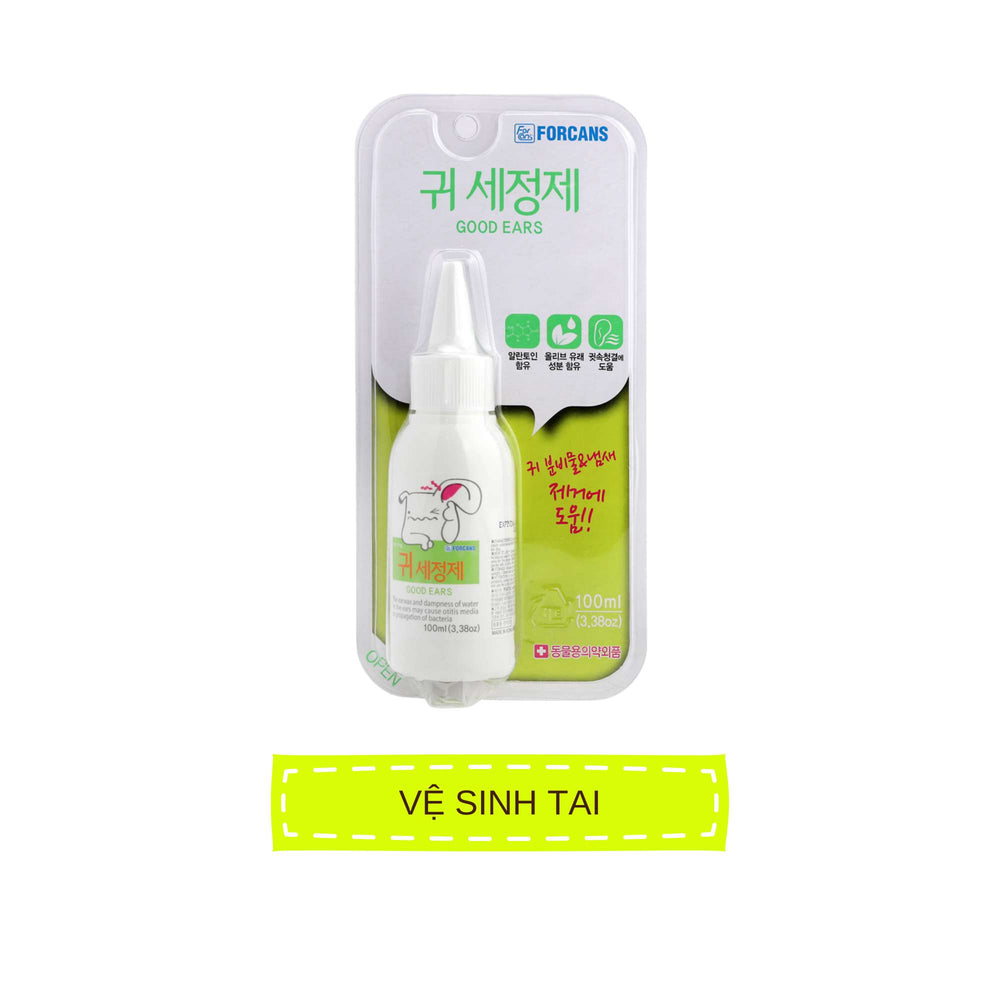
Specialized ear cleaning solution
-
Soft cotton balls or a clean cloth
-
A few treats to get the boss to cooperate.
-
-
Step 2: Apply the cleansing solution.
Instill 3–5 drops of the solution directly into the ear, gently allowing the solution to remain in the ear.
Step 3: Wipe clean
Gently massage the base of the ear to allow the solution to penetrate deeply, have the dog shake its head to dislodge the dirt, or use a soft cotton swab to clean the outer ear and inner edges. Avoid using cotton swabs to poke deep into the ear as this can push earwax further in or scratch the mucous membrane.

Note:
-
-
If your dog has long ear hair (like Poodles and Cocker Spaniels), you should trim the hair inside their ears to improve ventilation and reduce the risk of infection.
-
Keep your dog's ears dry; dry them immediately after bathing or when your dog gets wet.
-
If you notice your dog scratching its ears excessively or if its ears smell foul, take it to the veterinarian immediately for examination and prompt treatment to prevent the condition from worsening.
-
3. Take care of your eyes so they always "sparkle and speak volumes".
The eyes are a sensitive area, easily susceptible to dust, fallen hairs, and bacteria. Beautiful eyes should be clear and free of discharge.
3.1. Common problems
-
-
Yellow, green, or cloudy eye discharge
-
Red eyes, watery eyes, frequent blinking.
-
Rubbing your eyes frequently
-
Vision loss (difficulty focusing, bumping into objects)
-
3.2. Regular eye hygiene care for dogs
Eye problems are often detected early because they have easily noticeable symptoms. You should take the time to check your dog's eyes daily to detect any abnormalities.
Here's how experts recommend daily grooming for your dog:
-
-
Cleaning: Use a soft cotton pad and a specialized cleaning solution; avoid wiping with bare hands. Wipe from the inner corner of the eye outwards to remove dust, dirt, and stained tears.
-
Keep your eyes clean: You can use A specialized eye wash solution for dogs to remove dirt and debris.
-
Grooming: For long-haired dogs, trim the fur around the eyes neatly, using specialized scissors to ensure safety and avoid cutting the eyes.
-
3.3. Suggesting suitable products
Never use human eye drops on dogs, as they can cause serious harm to your pet's health.
Here are some suggested eye drops specifically for your pet that you can consider: Forcans eye wash solution, Bio-Groom, Beaphar Eye Cleaner, or TropiClean Tear Stain Remover.

Eye diseases in dogs can cause painful effects. However, almost all eye diseases are treatable with a high success rate if diagnosed early.
Therefore, careful observation and timely attention to changes are key to maintaining the dog's eyesight and comfort.
4. Oral hygiene and expert-standard care methods
4.1. Why do dogs need regular dental checkups?
To care for your dog's oral health, you need to pay attention to regular check-ups, a routine brushing schedule, and supportive hygiene to avoid problems such as gingivitis, plaque, and bad breath.
4.2. Expert-standard dental care methods for dogs
Regular brushing: Ensuring your pet's teeth are brushed at least 2-3 times a week is the most effective way to remove plaque and prevent cavities.
Use a toothbrush and toothpaste specifically designed for pets. You can start by introducing your dog to the toothbrush and toothpaste by letting them smell and taste it first.
Use toys and treats: Toys and chew bones can help remove plaque and improve your pet's oral health. Choose toys made from safe and durable materials.
Chew toys and bones not only help clean teeth but also entertain and relieve stress in pets, but limit sugary treats as they can create a breeding ground for bacteria.
Use specialized products: Use mouthwash, spray, or gel specifically designed for pets to clean and freshen their breath.

In addition, make sure to provide your pet with plenty of clean water and prevent them from getting a dry mouth.
Besides self-care methods at home, if your pet is too "stubborn" and refuses to cooperate when you check their teeth, then take them to a pet spa & grooming center for comprehensive care and dental check-ups by professionals.
5. Establish a regular grooming routine for your pet - The secret to an "easy and effective" pet care experience.
Frequency of ear, eye, and mouth hygiene. You can follow the hygiene schedule provided by Pet's Warehouse experts to care for your pet, helping them stay fresh, clean, and smelling good all day long.
|
Region |
Cleaning frequency |
Note |
|
Ears |
1-2 times/week |
Depending on the breed, you may need to increase the frequency of cleaning (dogs that swim frequently or dogs with floppy ears should have their ears cleaned more often). |
|
Eye |
Daily eye hygiene |
For long-haired dog breeds like Poodles, it's advisable to trim the fur around the eyes regularly to prevent hair from poking into the eyes. |
|
Mouth |
Daily oral hygiene |
If you don't have enough time, you can ensure hygiene 2-3 times a week. |
6. Common mistakes many dog owners make when caring for their dog's ears, eyes, and mouth.
-
-
Using cotton swabs to clean a dog's ears: This is a common mistake; many owners think this method is effective for cleaning, but they are inadvertently pushing dirt deeper into the ear and potentially tearing the eardrum.
-
Using dry tissue paper to wipe your eyes can easily cause pain and corneal abrasions. Use soft cotton pads, wet wipes, or eye cleansing solutions to wipe your eyes safely.
-
Not training your pet to brush their teeth from a young age: Many pet owners neglect dental hygiene, making it difficult to care for their pet's teeth when they are older, and the pet will refuse to brush. You should start training your pet from around 2-3 months old.
-
Using human toothpaste on dogs: Human products often contain foaming agents that are toxic to dogs if swallowed. It's best to use a specialized, safe product that doesn't require rinsing.
-
Not checking regularly: Pay attention to your pet every day, don't just clean them when you see eye discharge, foul-smelling ears, or bad breath… by then, the disease has already developed.
-
7. Frequently Asked Questions about Cleaning Your Dog's Ears, Eyes, and Mouth (FAQ)
Question 1. Do puppies need their teeth brushed, and when should we start?
Answer: Yes, puppies need to be introduced to dental care from a young age to develop good health habits.
The ideal time to start training puppies is around 8-12 weeks old, as at this stage they are highly adaptable and readily absorb new experiences.
Question 2. How can I prevent my dog from being afraid during teeth cleaning?
Answer: For the first few days, simply touch your dog's mouth, chin, and lips while they are relaxed. Use a finger to massage their gums and mouth, then reward them with a treat or praise.
Next, let your dog lick the dog toothpaste from your fingertip. Because the toothpaste has an appealing flavor (like chicken or beef), your dog will associate this taste with a pleasant sensation.
Once your dog is used to the toothpaste, let them smell, lick, and get acquainted with the toothbrush. Initially, you can use a finger toothbrush or gauze pad to make your dog feel more comfortable.
Question 3. Can dogs use salt water to clean their teeth?
Reply: It's possible, but it shouldn't be used frequently. Saltwater is only suitable for mild bad breath or inflammation. Long-term use can dry out the gums. It's best to choose a mouthwash specifically designed for dogs or a dental cleaning gel.
8. Discover ear, eye, and mouth care tools at Pet's Warehouse

Caring for a dog isn't just about feeding them well; it's also about understanding their body and avoiding small mistakes that could be dangerous.
By simply changing a few habits, you'll find your pet is more cheerful, smells better, and is healthier every day. If you're still wondering where to start, Pet's Warehouse - a pet store. The largest pet store in Vietnam will support you.
Here, you can find a complete range of ear, eye, and mouth care products from reputable brands, and if you have any concerns about nutrition or anything else regarding your pet, feel free to share them with our team of experts to receive support for any pet-related issues.